
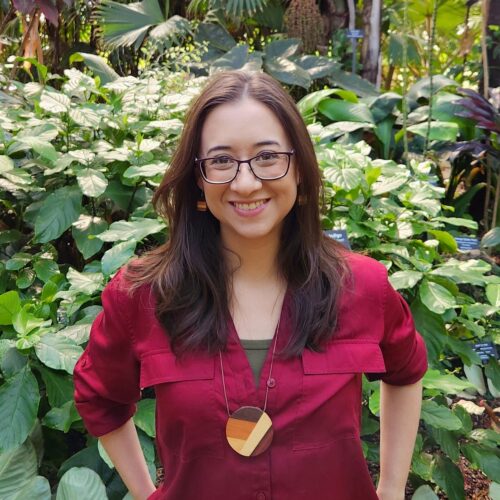
Mellany de Medeiros Nones LCPC, NCC
License No. 180.017278
Licensed Professional Counselor
National Certified Counselor
BCBS PPO, Blue Choice, Aetna, & United Healthcare
Areas of Focus
“The onset of inauthenticity may not be a choice, but with awareness and self-compassion, authenticity can be” – Gabor Maté
Hello there!
My name is Mellany de Medeiros Nones, and I am a Nationally Certified and Licensed Professional Counselor. I specialize in working with BIPOC clients who are immigrants or first-generation in the country — clients who navigate between cultures and systems that often fail to fully see their humanity, who may not speak English as their first language, and who might go through different processes of reconstructing their identity.
Although I welcome clients seeking psychotherapy for a wide range of issues, much of my work focuses on helping adults navigate moments of transition — whether due to planned changes, unexpected circumstances, loss, interpersonal and relationship challenges, cultural and identity-related experiences.
In our work together, I believe it is essential to build and hold a space where you can explore how you became who you are, feel connected and express yourself, find meaning in your experiences, clarify your needs and goals, nurture your strengths, and move toward the life you want to live.
My personal journey contributes deeply to my practice in this field. I was born and raised in Brazil, starting my career there as a therapist, going through clinical training in different countries and sometimes encountering opposing perspectives on mental health. My integrative approach is shaped by these contexts.
I am a multi-racial Latina, a bi/pansexual cis woman, from an emerging to middle-class family, and I have spent most of my life navigating different experiences between whiteness, white-passing and racialization. From a young age, I noticed my family’s experiences within racial and cultural dynamics, but I didn’t fully understand the impact of those experiences on my sense of self and identity until I immigrated to the USA. Growing up in a society that both celebrated cultural diversity and avoided honest conversations about race, I internalized conflicting messages about belonging and identity.
Through facing my own experiences with racism and xenophobia in the U.S., by reckoning with the privileges I had in Brazil and continue to hold in some spaces, I began to more deeply understand the harm caused by silence and the necessity of practicing anti-racism as part of healing work. While pain from the past might be unspoken, it still finds its way into the present — through generational patterns, our behaviors, the ways we relate to others, and how we care for ourselves.
As a result of my lived experience, I approach healing through an anti-oppressive lens, and I am committed to LGBTQIA+ affirming and neurodivergent affirming care. Recognizing that my proximity to whiteness afforded me certain privileges, I remain mindful of how power, privilege, and systemic inequities shape each person’s experience of safety, access, and belonging. I actively work to unlearn internalized norms and biases rooted in white supremacy, to acknowledge how these systems impact mental health, and to create spaces where the full humanity of individuals and communities is seen, honored, and centered.
“The task of resisting our own oppression does not relieve us of the responsibility of acknowledging our complicity in the oppression of others” – Beverly Daniel Tatum
Growing up in a society that both celebrated cultural diversity and avoided honest conversations about race, I internalized conflicting messages about belonging and identity. Through facing my own experiences with racism and xenophobia in the U.S., by reckoning with the privileges I had in Brazil and continue to hold in some spaces, I began to more deeply understand the harm caused by silence and the necessity of practicing anti-racism as part of healing work. While pain from the past might be unspoken, it still finds its way into the present — through generational patterns, our behaviors, the ways we relate to others, and how we care for ourselves.
I approach therapy from a collaborative, client-centered, relational, and culturally attentive framework, grounded in an active social justice perspective. I integrate the following principles into therapy:
Cultural-Historical, Intercultural, and Decolonial Therapy: This approach recognizes the importance of understanding the cultural practices and historical forces that have shaped clients’ experiences. It acknowledges the cultural differences between therapist and client and focuses on building a bridge to foster connection and a sense of belonging. It explores how clients navigate between cultural contexts, examines the lasting impacts of colonialism on social relationships and self-worth, and challenges white-, Western-, and imperialist-centered models of health and human experience.
Humanistic/Client-Centered Therapy: This approach views each client as a unique individual, honoring their lived experience and perspective of the world. Therapy is centered on the client’s needs, their potential for growth, and the pursuit of an authentic, meaningful life. It focuses on building awareness of how you make sense of your experiences and create meaning from what happens in your life.
Psychodynamic, Attachment, and Relational Therapy: This approach recognizes the relationship between client and therapist as an essential part of the healing process. It focuses on building awareness of the deeper influences and motivations behind your thoughts, desires, feelings, and actions. Together, we explore how early relationships and formative experiences have shaped who you are today — with curiosity and compassion, not judgment.
I welcome you, whether you are looking for a clinician with similar experiences to yours and/or a therapeutic space to root yourself and focus on your process. I also provide services in English and in Portuguese.
Beyond the therapeutic work, music and dance are a great part of my living experience. I enjoy watching movies, trying new desserts and teas, going to museums, learning about languages, history and biology. You can also find me spending time observing nature and tending to plants – even though I struggle in my relationship with insects/bugs.
Mellany de Medeiros Nones has received her Bachelor of Arts and Professional degree in Psychology from Universidade Federal do Paraná, in Brazil, and a Master of Arts degree in Clinical Mental Health Counseling from Northwestern University, in the USA.